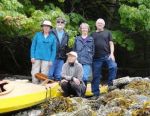
Trip Report – Bedwell Lake & Myra Falls – 25-27 Aug 2015

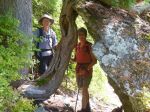
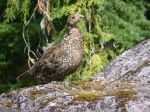
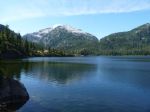
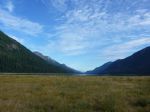
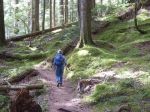
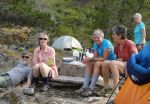
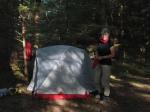
Five energetic souls headed up to Ralph River Campground. Our first night was settling into this very lovely campground and exploring the local area. Ralph River campground is quite a beautiful campground in that it has large private sites with many very large old growth trees. It is also not very busy especially during the week.

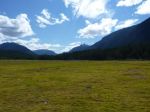
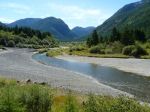
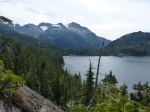
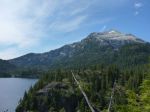
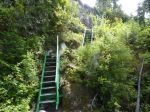
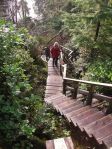
We set out the next morning to do our main hike to Baby Bedwell and beyond. The weather was coolish which was an advantage in our 600 meter elevation gain hike. The trail is man made and quite rough with lots of loose rocks and switchbacks. It passes through many beautiful areas of forest and river crossings before it reaches the sub alpine. We had the joy of sighting a very large black bear having his morning berry pick. He observed us without fear and kept vigilant without stopping his lunch.

We arrived at Baby Bedwell Lake, one of the most beautiful sub alpine areas. A delightful swim and lunch was enjoyed here. Three members of the team carried on to Bedwell Lake campground, a further 2 hour hike. Five tired hikers got back to Ralph River Campground for our usual delightful pot luck dinner. Car camping has its advantages!

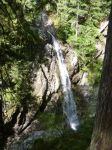
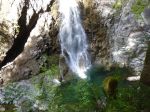
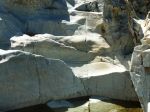
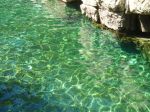
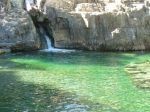
The next day, after a more leisurely start and breaking camp, we headed to Upper Myra Falls. This was a delightful 6 km walk through beautiful old growth forest (once we got through the waste lands of the mine) to Upper Myra Falls which was spectacular with its beautiful aqua blue pools.

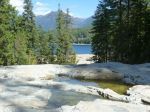
The group split at this point, some went exploring Lower Myra Falls, while the others sought out a swimming spot on Buttle Lake. It was a very enjoyable three days spent in a very beautiful area so close to home.

Sheelagh

click on photos to see enlarged

Hiking – Ralph River – 25-27 August 2015

Trip Report – Circumnavigate Read Island – 10-13 August 2015

Monday, August 10
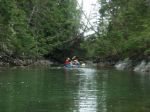
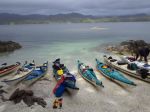
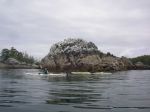
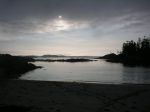
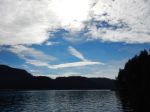
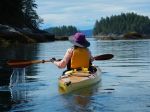
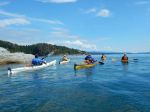
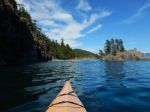
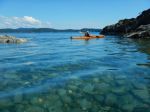
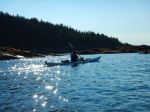
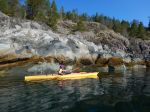
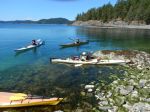
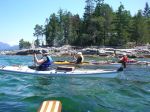
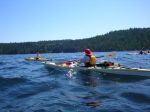
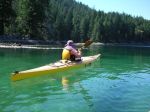
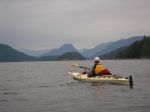
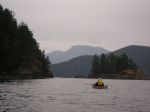
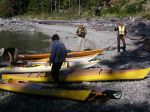
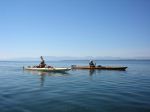
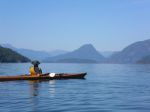
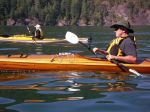
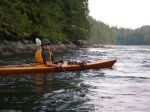
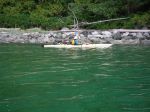
Our group of six (Debbie, Norris, Val, Sheelagh, Lonn and Darcy) launched mid-morning from Discovery Islands Lodge at Surge Narrows in sunny weather with light NW winds. (Thanks to Ralph and Lannie for permission to launch, and to leave our vehicles at the Lodge.) Paddling south toward Viner Point, we took a short lunch break on the north side of the middle King Islet – a rough ‘oyster’ beach, but some potential as a campsite. About 3 p.m. we reached our planned campsite, an abandoned homestead in the second last bay before the Point. As it was still early, some of the group suggested we continue to Lake Bay to check out possibilities there. There is a nice looking campsite at the head of the bay, but as it was occupied, we looked a little further north, then returned to the Viner Point site about 5 p.m. On the way back, we could see humpback whales spouting along the east shore of Quadra Island.

The Viner site has space for 5 or 6 tents in a grove of alders with a couple of small areas on the beach. During supper and through the night, we were entertained (or kept awake….) by fish jumping in the bay, and humpbacks spouting and breaching further off shore. 19 kilometres paddled.

Tuesday
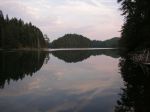
After the early morning humpback show, breakfast, and breaking camp, we launched at 9 a.m. for a beautiful low-tide paddle along the steep shores north of Viner Point. As the wind was forecast to rise to 10-20 by noon with a strong wind warning for late in the day, we took only a short lunch break at Frederic Point (a beautiful site but awkward landing on most tides). It was windy and choppy through Whale Passage, but settled down as we turned the corner and headed north along the east shore of Read Island. Crossing to South Rendezvous Island, we discovered that our hoped for campsite was occupied by a large commercial group. After some discussion, we decided to check out the site on the north end of the island (where some of us had camped in 2014) although landing is difficult except at lower tides. As we arrived at high tide with a northeast wind and rough-ish water, we landed on various ledges and hauled the kayaks well up on the rocks. The main part of the site is a rocky point open to both the east and west – scenic, but exposed. There is also space for tents at the head of the small bay in a dark but sheltered forest. The point has space for 4-5 tents, but ideally 2-3. After a calm evening, the promised wind finally arrived after dark, with most of us scrambling out of tents to batten down the hatches (and save anything hanging out to dry.) Those inclined to wake in the night reported beautiful phosphorescence in the breaking waves.     23 kilometres paddled.

Wednesday
The wind was still blowing on Wednesday a.m. With the challenge of launching boats into the waves and wind, most of us elected to spend the day ashore. Lonn decided to head home, leaving about 9:30. Debbie and Norris, who had landed in a slightly more sheltered spot, took an afternoon paddle around the Rendezvous group, while Val, Sheelagh and Darcy read, snoozed, snacked and chatted until the tide rose sufficiently to move boats around to the head of the bay for launching in the morning.

Thursday
After hauling gear over the rocks, and carrying kayaks over logs and slippery boulders, we launched at 10 a.m. en route to White Rock passage. Sunny, winds light NW. Uneventful paddle back to the Lodge apart from some lively currents near Beazley Passage. Landed at 12:45. 13 kilometres paddled.

Total trip length – 55 kilometres.

Overall, it was a great trip with excellent weather and wildlife viewing. The main challenge is the scarcity of campsites in the area, which makes it difficult to plan an optimal day’s paddle.

Darcy Mitchell, coordinator


(click on photos to view larger)

Kayaking – Around Read Island – 10-13 August 2015

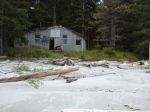
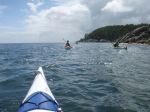
Kayaking in the Hakai Conservancy – July 2015

(scroll down for photos)

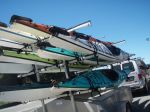
Access for kayakers wanting to paddle in the central coast has recently become more difficult. BC Ferries used to let kayakers wet launch at several places along its route on the central coast, but the new ferry is not equipped for that. However, BC Ferries still provides kayak transport to McLoughlin Bay near Bella Bella and there is a convenient beach launch site right at the ferry terminal.

For background information about kayaking in this region, see these articles:
http://www.wavelengthmagazine.com/1996/jj96ferry.html
http://www.wavelengthmagazine.com/PaddleBCCentralCoast.html
http://www.coastandkayak.com/2003/jj03central.html

The target kayaking region is from Calvert Island to Bella Bella, with lots of little islands to explore. It is part of the Hakai Lúxvbálís Conservancy and the Great Bear Rainforest.

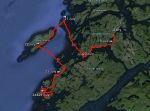
After looking into the region and the problems of getting there with all our gear, organizing the food, and general safety issues, we decided to go with a commercial kayak tour. There are very few of those to this region and one of them happens to be Quadra based. Spirit of the West (kayakingtours.com) ran two trips to Great-Bear-Rainforest-Outer-Islands this summer, and we went with their first one ever. Seven of us from the Quadra Outdoor Club, two excellent guides (Graham and Sam) and three other women, making 12 paddlers and 10 kayaks in total. The trip was eight days long and we paddled about 20 km each day.

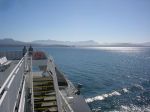
The new ferry is very upscale and provides great buffet meals in the restaurant. Two problems. One, the ferry leaves early in the morning and returns late at night, so it works best to overnight in Port Hardy at the beginning and the end, but every room in Port Hardy books way in advance. Solution: there are inexpensive hostels, but you still need to book in advance. Two, it leaves early in the morning and they want you at the ferry at 5 a.m. and it’s a half hour drive out of town. No solution; it takes them a long time to load.

We loaded the gear into the kayaks at McLoughlin Bay and it was blazing hot with no breeze. By the time we got on the water it was after 16:00, we had a fair headwind and we were never too hot again. We didn’t paddle far before we stopped for the night at a small lagoon just north of the junction of Lama and Hunter Channel. Space was limited for the eight tents, but we were very protected.

The next day was windy and rainy. We crossed Lama Passage and paddled southwest, against the wind, along the Campbell Island shore. We explored wonderful inlets and channels along the way. The weather had improved by the time we reached our campsite on island “49”, a cozy, protected midden beach.

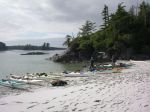
On day three we paddled through some amazing narrow channels and then on through the Admiral and Tribal group of islands to the McMullin Group. We meandered through the shallow waters between islets and then camped on a spectacular, white sandy beach with great views.

On day four we continued through the McMullin islands and then crossed to the north end of Goose Island. We were fortunate to have only a bit of wind and not a lot of swell for this 45-minute crossing. This area is both exposed and shallow and would not have been possible in many conditions. We had lunch and explored the long sandy beach with cabins once used by the Heiltsuk rediscovery camp. We continued to paddle along the east side of Goose Island, against some wind and current, to Gosling and Snipe Islands. This area also has extensive shallow sandy areas, which connect the islands at a low tide. We camped on Snipe, with beaches on both sides.

On day five, we made the big crossing over Queen Sound to the Simonds and McNaughton Group. We got an early start in order to reach protected waters before the forecast strong afternoon winds. In the McNaughton Group, we paddled along very narrow channels admiring the intertidal life and camped on another sandy beach on Hunter Island near Cultus Sound. This site had a short walk through very impressive old growth forest to another beach.

The following day, we continued south to Triquet Island. Although we were mostly protected from the fairly strong southwest winds by islets and channels, the crossing south of Superstition Point was quite bouncy with refracted waves. We paddled through Spitfire Channel and Spider Anchorage. We camped on Triquet for two nights, enjoying more leisurely day paddles, beach-time and walks on the seventh day.

On the last day the water taxi picked us up, returning paddlers, kayaks and gear to the ferry dock. In the early evening we boarded the ferry back to Port Hardy. We saw humpback whales in Lama Passage and Fitz Hugh Sound.

We expected northwest winds; we got southeast and southwest winds. The unusually hot summer weather changed just before our trip. For a drought, we had quite a bit of rain. However, we cannot complain about the weather. This area is extremely exposed, so we were lucky we had good weather for the big crossings we made. We hoped to also cross notorious Hakai Passage to Calvert Island, but conditions were not favourable. Thanks to satellite technology, we were not forced to make that crossing. The guides used an inReach SE so that they could send text messages via satellite to the water taxi so they could pick us up wherever we happened to end up on the last day.

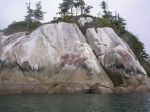
Other trips would have other weather and interests and take other routes. It’s a big area with lots to see. Incredible white sandy beaches, amazing sculptured granite cliffs along the shore, sea otters, sea lions, big trees, sand hill cranes and more than 20 other birds. Some sun, some rain, some wind, some calm, some swell, some waves, no fog. We saw a few fishing and cruising boats, but very few other kayakers. It’s a great place.

Thanks to the guides for all their hard work watching out for us, the great food, and arranging everything.

Photos by K. Manry, V. van Veen, M. Wood and N. Weimer.

(click on photos to view larger)


Kayaking – Around Read Island – 10-13 August 2015

Activity Multi-day paddling
Destination Circumnavigate Read Island
Date 10-13 August 2015, Monday-Thursday
Trip Coordinator Darcy Mitchell
Contact Info darcm@telus.net or 285-2739
Description A three-night paddling/camping trip. Depending on weather conditions, we will launch from either the Hyacinthe Bay area or Discovery Islands Lodge (near Surge Narrows).
Meeting Place TBA
Departure Time TBA
Difficulty
Moderate to difficult. We should expect to paddle between 15 and 20 kilometres per day.
Costs Launching fee if trip starts at Discovery Islands Lodge.
Trip limits 6 people
Dogs? no
Notes: Please contact the trip coordinator no later than July 31 if you’re interested in this trip. Once we know who will be going, we’ll discuss details.


Hiking – Ralph River – 25-27 August 2015

Activity Hiking and camping
Destination Ralph River, Strathcona Park
Date 25-27 August 2015, Tuesday-Thursday
Trip Coordinator Sheelagh Elmitt
Contact Info 285-2296 or sheelaghelmitt@yahoo.ca.  If you want to go on this trip you need to contact Sheelagh and commit ASAP.
Description We will spend two nights at the Ralph River Campground. We will hike to Bedwell Lake on Wednesday.  The other two half days we will do shorter hikes.  Bedwell is a moderate hike to a beautiful alpine lake.  Six kms long with 600 metres elevation. About 3 hrs one way.
Meeting Place Quadra ferry terminal to Campbell River
Departure Time 9:00 am ferry
Difficulty
moderate to easy
Costs camping fees, ferry and shared gas
Trip limits camping gear and fitness
Dogs? no
Notes: As of July 2nd there are very few campsites left at Ralph River, so it’s important to commit soon if you want to go on this trip.

Trip Report – Kayaking Carrington Bay – 23-25 June 2015

We took the first ferry to Cortes, drove to Sea Vista to launch our kayaks with our camping equipment. We paddled through Plunger Passage, past Coulter Bay, into the Sutil Channel and onto Carrington Bay. This was interesting and at times a little challenging. On arrival at Carrington Bay we set up our tents near the lagoon entrance. A narrow channel through which the tide flows, mixing salt and fresh water. A lovely camping area with many sunny spots with the lagoon for swimming. (Sheelagh and Valerie had a swim at night)

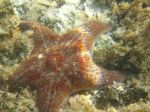
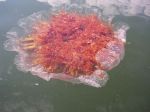
Carrington Bay is home to a significant amount of wildlife, beautiful old growth trees and a network of hiking trails. After setting up camp, we paddled in the bay only, due to strong winds and white caps in the channel. Spent time exploring Carrington Bay. We discovered a huge number of Sea Cucumbers in the lagoon and on other rocky shorelines. The next day we did a marathon of 27.2km, taking in Frederic Point and onto the Penn Islands. Beautiful rock faces, stunning arbutus groves, seals keeping watch, glorious colours……you get the picture. After lunch, we paddled onto Von Donop to explore. Beautiful purple starfish, a welcome treat to us all. We had a couple of showers, however, they were refreshing and light. Moon Jellyfish in an abundance in the Carrington Bay. We arrived back to camp by 5 p.m……a great workout. All dinners were superb, dishes done and into bed early. The weather called for strong winds arriving by noon on Thursday, we decided to get moving early the next morning.  The return paddle was the same route. We took the opportunity to explore Coulter Bay. Arriving in time to take the 1:50 p.m. return ferry. Tired but all very happy kayakers.

A great group of QIOC members………thank you for joining me on one of my favourite islands.  – Margot

(click on photos to view larger)
Kayaking – Carrington Bay – 23-25 June 2015

Kayaking – Carrington Bay – 23-25 June 2015

Activity Kayaking and camping
Destination Carrington Bay, Cortes Island
Date 23-25 June 2015 Tuesday-Thursday
Trip Coordinator Margot Wood
Contact Info 285-2393.  Please inform Margot before June 19th, 2015.
Description Three days of kayaking and hiking in and around Carrington Bay.

We will take the first ferry to Cortes, drive to Seavista to launch our kayaks with our camping equipment. Kayaks have to be carried down to the beach, leaving our cars at the top parking area. We will paddle through Plunger Passage, Coulter Bay, into the Sutil Channel and onto Carrington Bay. This is interesting and can be a challenging paddle. On arrival at Carrington Bay we will set-up our tents near the lagoon entrance, a narrow channel through which the tide flows, mixing salt & fresh water. This is indeed  a lovely camping area with many sunny spots & the lagoon for swimming.
Carrington Bay is home to a significant amount of wildlife, beautiful old growth trees and a network of hiking trails. Days will be spent paddling & exploring Carrington Bay, north to Quartz Bay, all dependent on the weather conditions. Hikes to be taken within the Carrington Bay Park.  The return paddle will be the same route, taking time to explore Coulter Bay. Hopefully arriving in time to take the 3:50 p.m. return ferry.
Please note: one must have camping equipment, food, water, clothing to fit into their sea kayaks,  and all required safety equipment.  Also we are camping in wildlife country. First night pot-luck dinner, will arrange at a later date.
Margot will have different plans to accommodate the weather conditions.

Meeting Place Quadra ferry terminal to Cortes
Departure Time 9:05 ferry to Cortes
Difficulty
moderate to difficult
Costs ferry to Cortes
Trip limits sea kayaking skills
Dogs? no
Notes: Please do your best to plan car sharing. We will be watching the weather patterns closely.

Trip Report – Hiking Ucluelet 2-4 Feb 2015

After arriving at the vacation rental in Ucluelet around noon, we had lots of time on Monday to walk to Florencia and Half Moon Bay at the south end of Pacific Rim National Park. The hike took us through beautiful old forest, along boardwalk, and down stairs to the long sandy beach at Florencia and then up and down again to the more intimate beach at Half Moon Bay. (9.7 km)

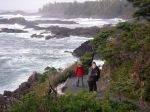
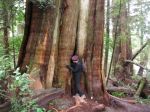
On Tuesday, we hiked the Lighthouse loop on the Wild Pacific Trail in Ucluelet in the morning (3.0 km) and after lunch we hiked from Big Beach to the Cedar Grove and back. (8.5 km) This is a beautiful, rocky coast, which contrasts well with beaches in the Tofino area. The lighthouse, islets, surge channels and wonderful trees are incredibly scenic.

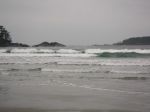
On the last day, we spent about an hour exploring Tofino and then walked the length of Chesterman’s Beach before heading home. In all three days we never had more than a brief bit of drizzle, and sometimes we had sunny breaks.

We also had fun in the evening at the house we rented on the Ucluelet Inlet. We had a wonderful seafood feast on Monday with mulled wine, Oysters Rockefeller, BBQed salmon, roast vegetables, salad and chocolate cake. On Tuesday, we had lasagna with homemade noodles, with all the trimmings. The house had an exceptional woodstove and book collection. The nearly full moon lighted the inlet each night.

(click on photos to view larger)
Hiking Ucluelet – 2-4 February 2015

Hiking Ucluelet – 2-4 February 2015

Activity Hiking
Destination Ucluelet
Date 2-4 February, Monday-Wednesday
Trip Coordinator Debbie Quigg
Contact Info qioutdoorclub@gmail.com
Description We will be staying in Ucluelet for two nights at a vacation rental and doing day hikes in the Ucluelet/Tofino area
Meeting Place arranged each day
Departure Time
Difficulty moderate
Costs accommodation, ferry and transportation
Trip limits The accommodation in Ucluelet is full, but if anyone wants to make their own arrangements we can meet up for hiking
Dogs?  no
Notes: Be prepared for rain

Trip Report – Cortes and beyond 15-17 Sept 2014

Debbie, Norris, Margot, Lonn and Darcy boarded the 9:05 ferry to Cortes on Monday morning and launched at the foot of Sea Vista road – a bit of a carry from the parking area made much easier by loading all the gear except boats on Lonn’s truck which he was able to drive to the beach. We left near high tide on a beautiful, sunny, windless day and paddled north through Plumper Passage and on to the entrance to Von Donop Inlet, with a short lunch break at Carrington Bay.

Our first plan for a campsite was to select one of the two reported on either side of Robertson Creek, about a kilometer northwest of Von Donop entrance. The first site showed a good beach, but tent sites appeared to be well back in the bush and rather dark. The second site would have been fine had it not been littered with derelict boats, floats, Styrofoam blocks and other detritus. So, following a futile hunt by Margot and Lonn to the north, we paddled back into Von Donop Inlet, to a beautiful, flat, open spacious site among huge cedars at the entrance to Von Donop lagoon. There’s even a picnic table!

Following happy hour (with smoked salmon), dinner and a campfire, we crawled into our tents and woke next morning to another beautiful day. We first checked out the entrance to the lagoon to see whether it would be possible to paddle in (an exercise we repeated later in the day at a higher tide). The lagoon entrance is full of shellfish and sea stars that obviously relish the rushing water. We then paddled across Sutil Channel to the Penn Islands. We spotted one small group of kayakers (who turned out to also be from Quadra Island) and landed at a campsite on the east side of northernmost Island. The beach has excellent protection from all weathers and several tent sites (occupied by the tents of our Quadra neighbours). After paddling among the islands, accompanied by snorting, blowing and splashing seals, we returned to Von Donop and, starting at the north shore of the lagoon entrance, hiked up to Wiley Lake. On the way back, we stopped to investigate a small cabin, which has been built by local residents to provide emergency shelter for boaters and hikers. We again tried to enter the lagoon, but concluded that tides likely need to be higher than 14 or 15 feet to make entry possible.

After another quiet night (except for the odd owl and the rustle of curious rodents), we broke camp for the return trip. With impeccable timing, the weather started to change and we paddled back in a light headwind followed, as we drove onto the ferry, by the first drops of rain.

In all, we paddled about 60 kilometres over the three days.

submitted by Darcy Mitchell, trip coordinator

(click on photos to view larger)
Paddling/camping beyond Cortes 15-17 Sept 2014